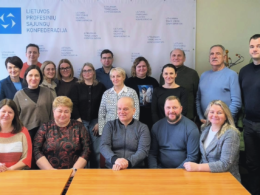




On March 18, at the European Union (EU) Social Summit held in Brussels, representatives of the European Trade Union Confederation (ETUC) conveyed workers’ expectations. The meeting was also attended by colleagues from Lithuania – Deputy Chair of the Lithuanian Industry Trade Union Federation, Jurga Subačiūtė-Žemaitienė, and Chair of the trade union “Solidarumas,” Kristina Krupavičienė.
In his report on competitiveness, Mario Draghi stated that, in order to achieve its goals, Europe must increase investments by 5 percentage points annually until 2030.
However, trade union representatives at the meeting pointed out that investment levels remain lower than in the final years before the pandemic and are declining in sectors that are crucial for boosting productivity.
This further amplifies the impact of U.S. tariffs on the EU economy and contributes to deindustrialisation, which is costing 27,000 manufacturing jobs every month and has led to rising unemployment in 14 Member States.
Therefore, the ETUC calls for:
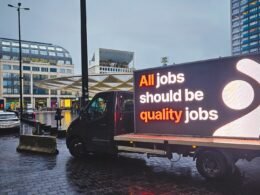
• The adoption of an EU Quality Jobs Act to combat precarious employment, ensure fair conditions and a just transition, and protect workers’ rights;
• The “Made in Europe” principle to be aligned with quality jobs;
• Increased public investment, including the issuance of eurobonds;
• Crisis management measures to protect jobs and production in strategic sectors at risk;
• The promotion of domestic demand through collective agreements and higher wages for workers;
• Measures to ensure energy affordability, including freezing profit margins and decoupling electricity prices from gas pricing mechanisms.
Speaking at today’s EU Social Summit, ETUC General Secretary Esther Lynch said:
“Europe’s biggest competitiveness problem is not employment protection. It is chronic under-investment, and deregulation is not the solution.
“We cannot afford a repeat of interest rate increases exacerbating a cost-of-living crisis. Profiteering must be ruled out while workers and businesses face rising costs.
“At the meeting, it was important for trade unions to deliver a clear message: Europe should choose a responsible path – investing in people, in quality jobs, and ensuring that decisions during times of change are made together with their representatives – trade unions – through negotiation. Collective bargaining plays a crucial role at this stage, and we seek to make it an important criterion in public procurement rules”, – Lithuanian representative Jurga Subačiūtė-Žemaitienė shares.